
How to Qualify for More (Without Stretching Too Far)
Mortgage strategyPart of the Coastal Blue mortgage guide
By Nick Atwal
2-Minute Summary
Lenders use Gross Debt Service (GDS) and Total Debt Service (TDS) ratios to determine affordability.
Paying down small debts can significantly boost qualifying power.
Credit scores directly affect both approval and rates offered.
Rental income and self-employed income can be used strategically if documented properly.
The safest strategy is to increase qualifying without stretching beyond what feels comfortable.
Your Path to Smarter Home Financing
Understand the Ratios (In Plain English)
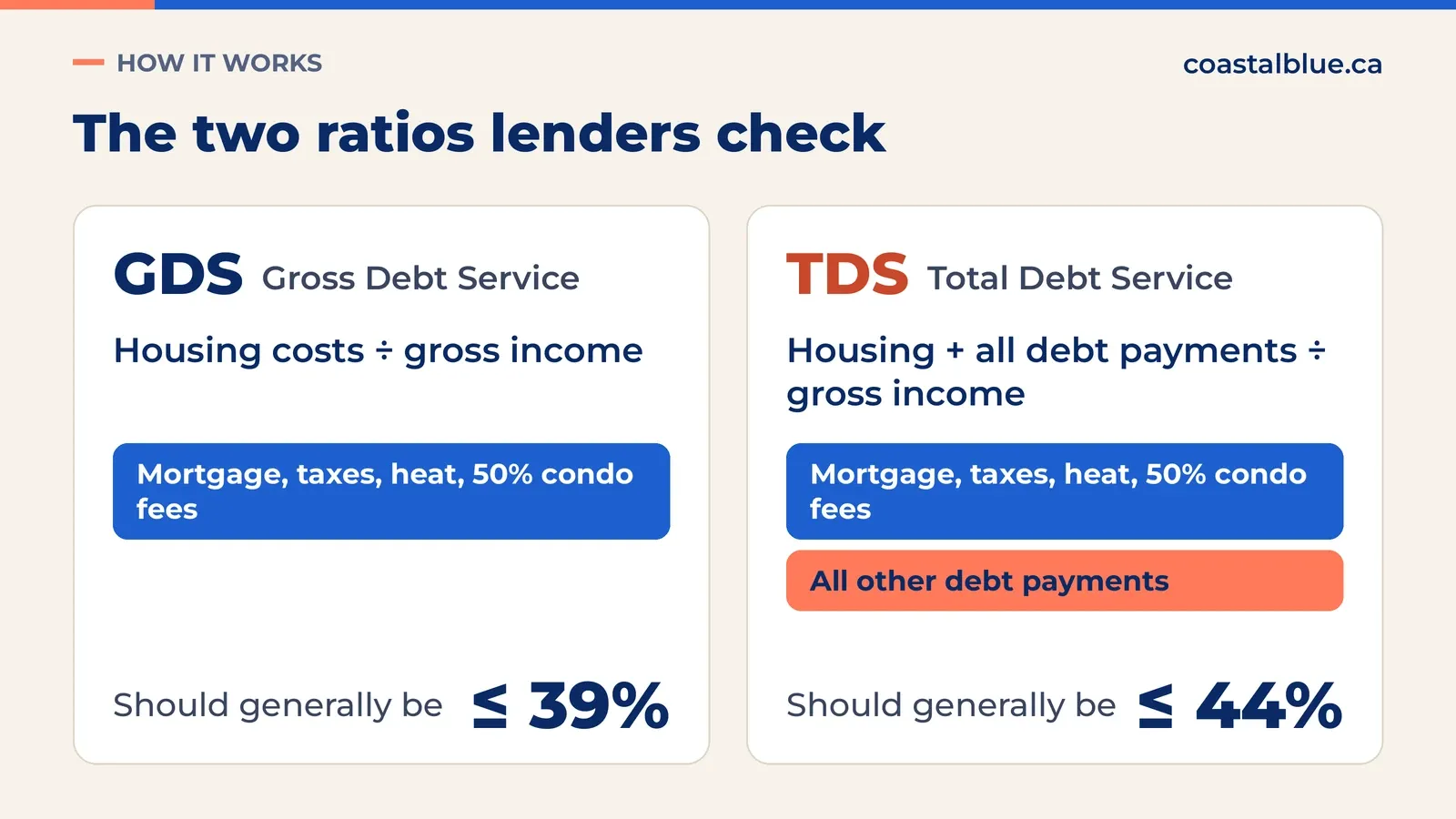
| Gross Debt Service (GDS) | Total Debt Service (TDS) |
|---|---|
| Housing costs ÷ gross income. Should generally be ≤ 39% | Housing + all debt payments ÷ gross income. Should generally be ≤ 44% |

Nick's Note
I worked with a Burnaby buyer who paid off a $5,000 credit card balance. That small change bumped their TDS just enough to qualify for about $20,000 more mortgage, enough to get the home they wanted.
Want me to run your GDS and TDS ratios with today’s rules? I can model your numbers in minutes.
Also Read: First-Time Buyer Incentives in Canada →
Consider Rental Income to Qualify
Some lenders allow rental income from suites or investment properties to help qualify. Policies differ:
Offset method:
- Deducts a portion of rental income from expenses.
Add-back method:
- Adds a percentage of rental income to your income.
Nick's Note
One Vancouver client used the legal suite in their East Van home to qualify for $120,000 more borrowing power. Without rental income counted, they wouldn’t have been approved.
Curious if your property could qualify with rental income? I can review lender policies with you.
Income Structuring Matters (Self-Employed Buyers)
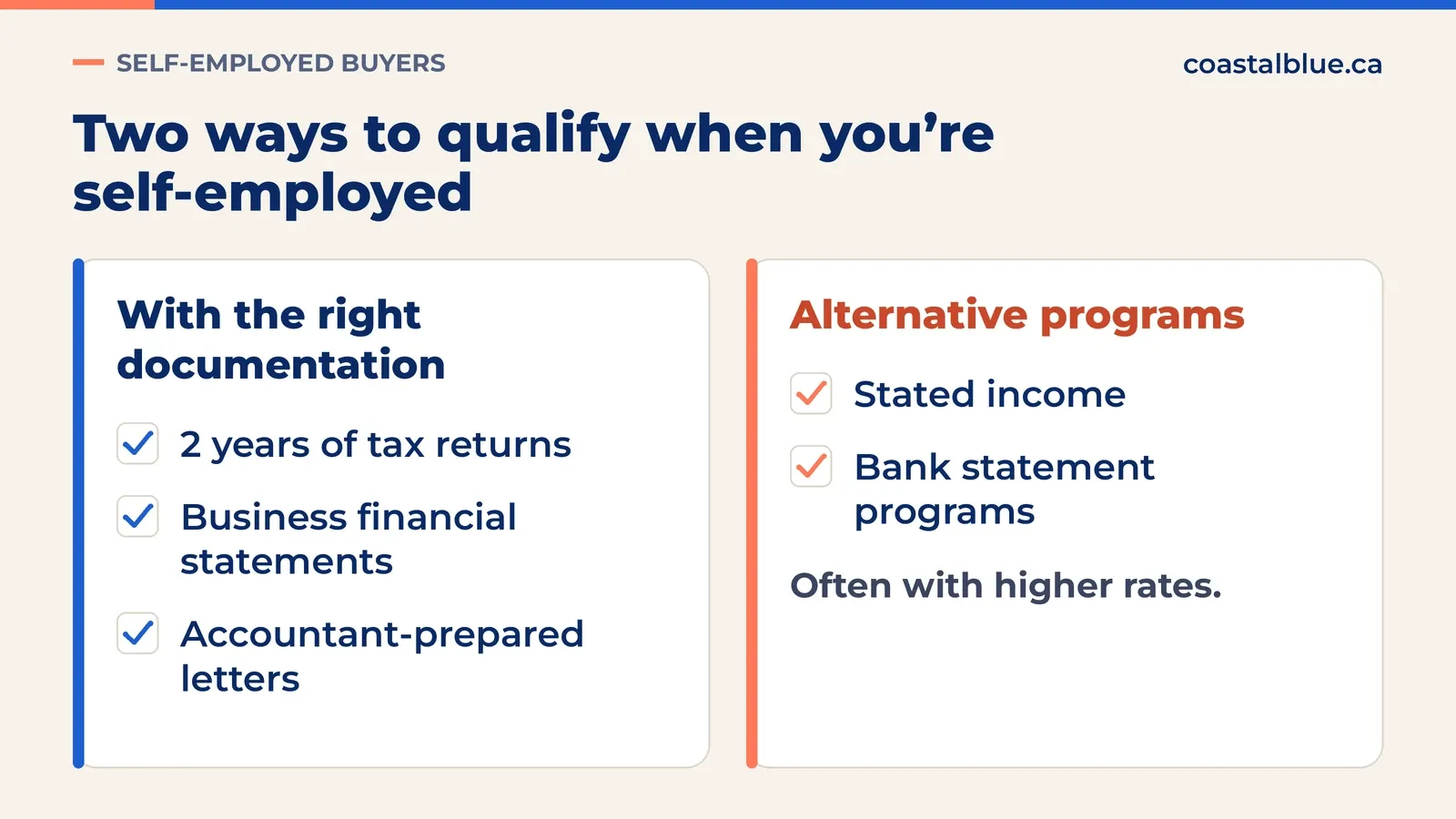
- Self-employed borrowers can qualify with the right documentation:
- 2 years of tax returns
- Business financial statements
- Accountant-prepared letters
Some lenders offer alternative programs (stated income, bank statement programs) but often with higher rates.
Nick's Note
I’ve seen successful entrepreneurs delayed because of messy books. In contrast, a Kelowna client with clean records got approved faster — and with a lower rate.
Are you self-employed? I can show you which lenders are self-employed friendly and what documents you’ll need.
Also Read: Should I Buy Now or Wait for Rates to Drop? →
Frequently Asked Questions
You Have Questions — We Have Answers!
A Practical Way to Boost Qualifying
| Strategy | Impact |
|---|---|
| Pay off small revolving debts | Improves TDS ratio |
| Raise credit score | Better rates, smoother approval |
| Add co-borrower or guarantor | Increases total income |
| Consider rental income | Can expand approval significantly |
| Structure self-employed income cleanly | Opens access to more lenders |
Frequently Asked Questions
You Have Questions — We Have Answers!
Qualifying for More
What’s the fastest way to qualify for more in BC?
Paying down small debts is often the quickest way to improve TDS.
Can I use rental income from a suite?
Yes, depending on lender policy, appraisals, and leases.
Is self-employment a disadvantage?
Not if you have clean records — some lenders specialize in self-employed borrowers.
Bottom Line
Improving your qualifying amount doesn’t have to mean overextending yourself. Strategic moves — from paying down debt to documenting income properly — can boost approval without increasing risk.
Quick Takeaways: Lenders rely on GDS/TDS ratios to measure affordability.
Credit score impacts bothapproval andrates.
Rental income andself-employed structuring can expandborrowing power.
The goal is to qualify strategically, not stretch dangerously.
If you’d like, I can run your qualifying numbers with today’s BC rules so you know your safe budget before you shop.
Your Path to Smarter Home Financing

Written by: Nick Atwal
Mortgage Broker at Coastal Blue Mortgages
BCFSA licence 504576
Top 5% of Dominion Lending Centres brokers in Canada, 2022Canadian Mortgage Professional Rising Star, 2023
Nick Atwal is a mortgage broker at Coastal Blue Mortgages, helping families and business owners with complex structuring and refinancing solutions. Recognized as one of Canada’s rising young mortgage professionals by Canadian Mortgage Professional, he focuses on thoughtful planning, clear communication, and long-term financial outcomes.
More about NickGross Debt Service (GDS) & Total Debt Service (TDS) Explained in BC
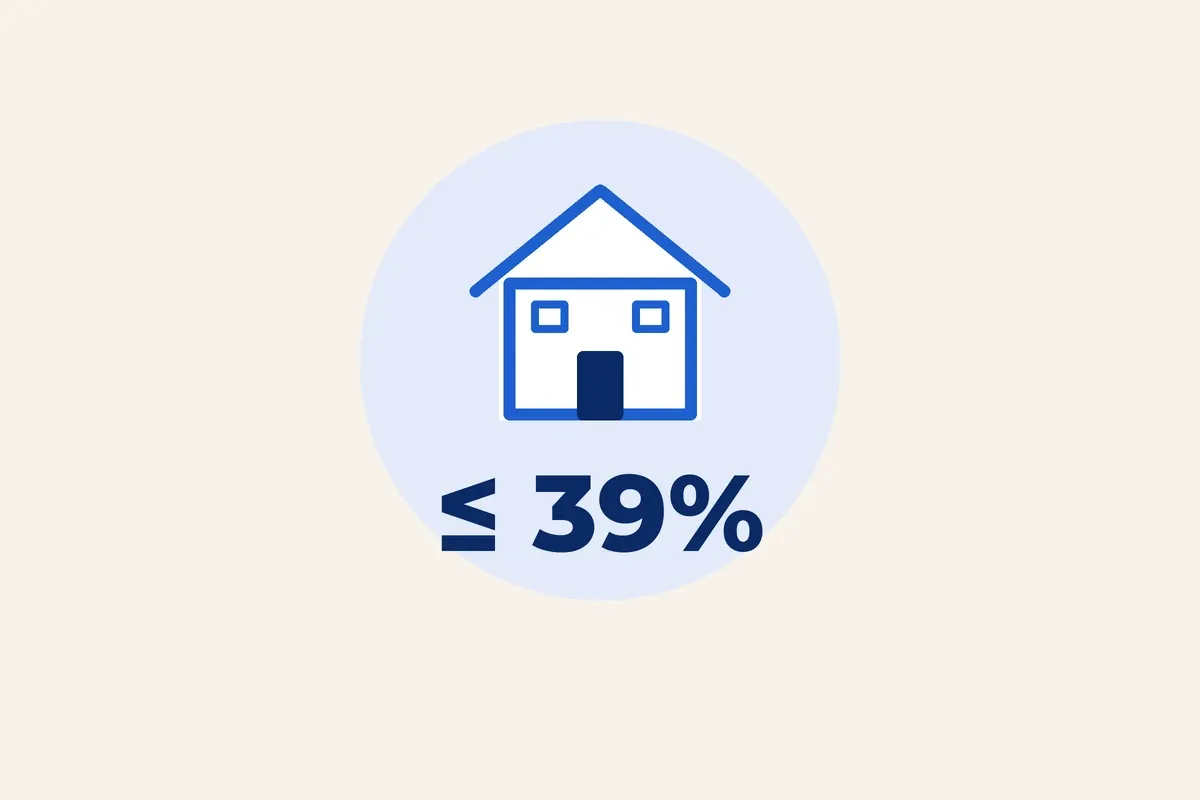
What is GDS?
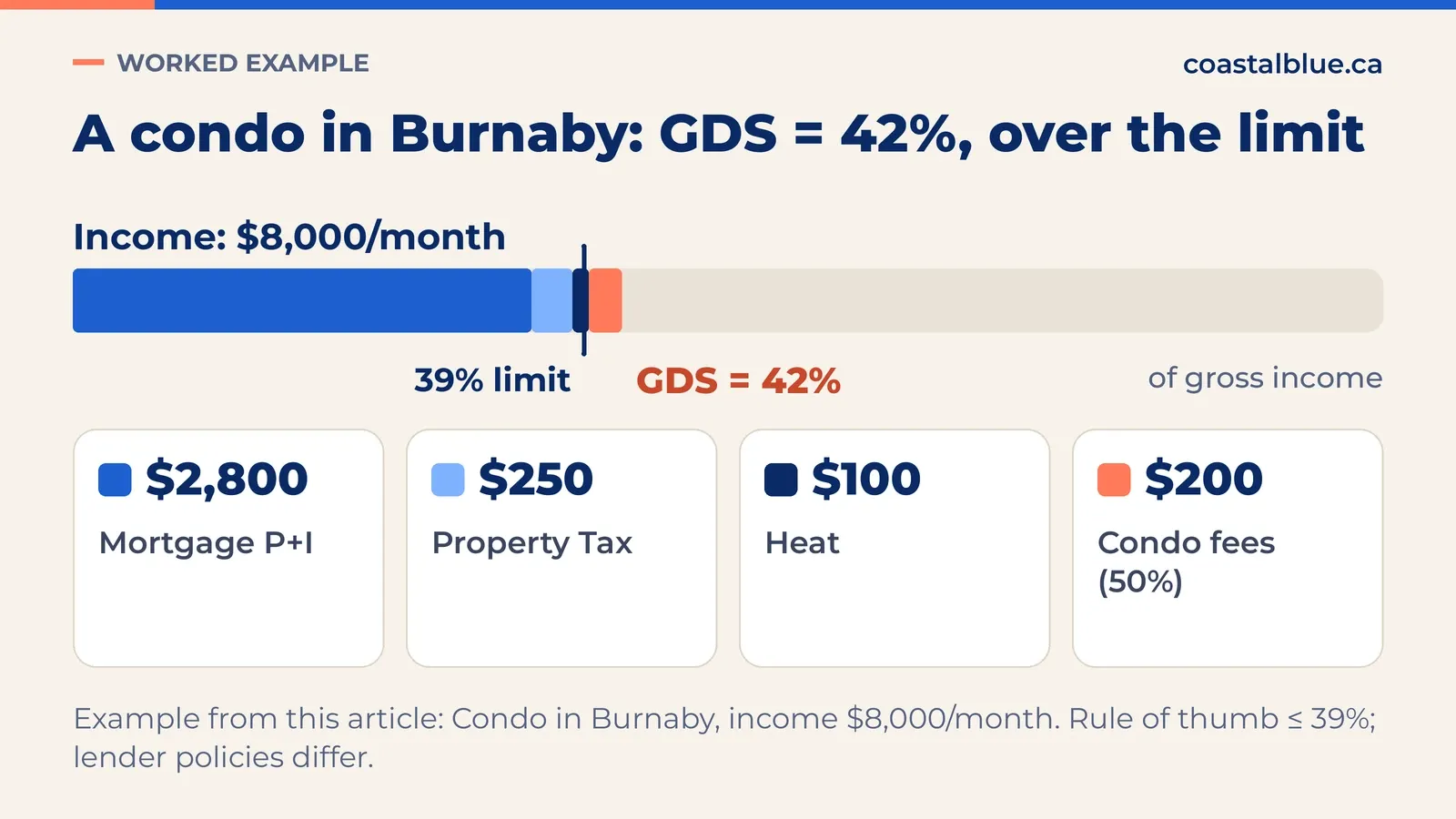
Percentage of income for housing costs (mortgage, taxes, heat, 50% condo fees). Rule of thumb ≤ 39%.
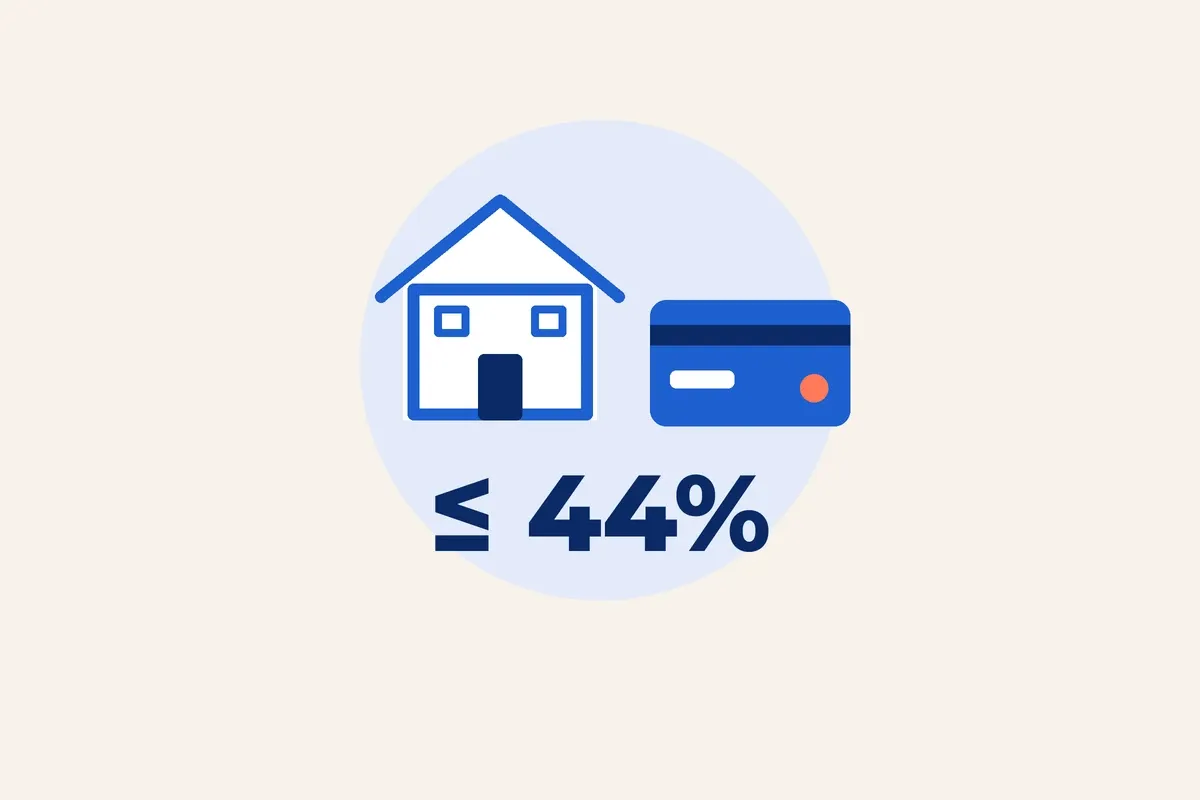
What is TDS?
Percentage of income for all debts including housing. Rule of thumb ≤ 44%.
Example: Condo in Burnaby
- Income: $8,000/month
- Mortgage P+I: $2,800, Property Tax: $250, Heat: $100, Condo fees (50%): $200
GDS = 42% → Over limit
Nick's Note
A buyer in Burnaby was over the limit at 45% TDS. Paying off a $5,000 credit card cut their debt payments by about $150 a month, which brought their TDS under 44%, and they qualified.
Credit Score & Mortgages in Canada
Many lenders save their best rates for scores around 680 and up.
600–679: usually still approvable, sometimes at a higher rate
Below 600: usually needs an alternative lender (CMHC’s minimum for an insured mortgage is 600)
Quick Wins:
- Pay on time
- Keep utilisation 30%
- Avoid new credit before applying
Nick's Note
A Surrey buyer improved from 645 to 690 in 6 months, saving 0.25% in rate — $8,000 over 5 years.
Two methods:
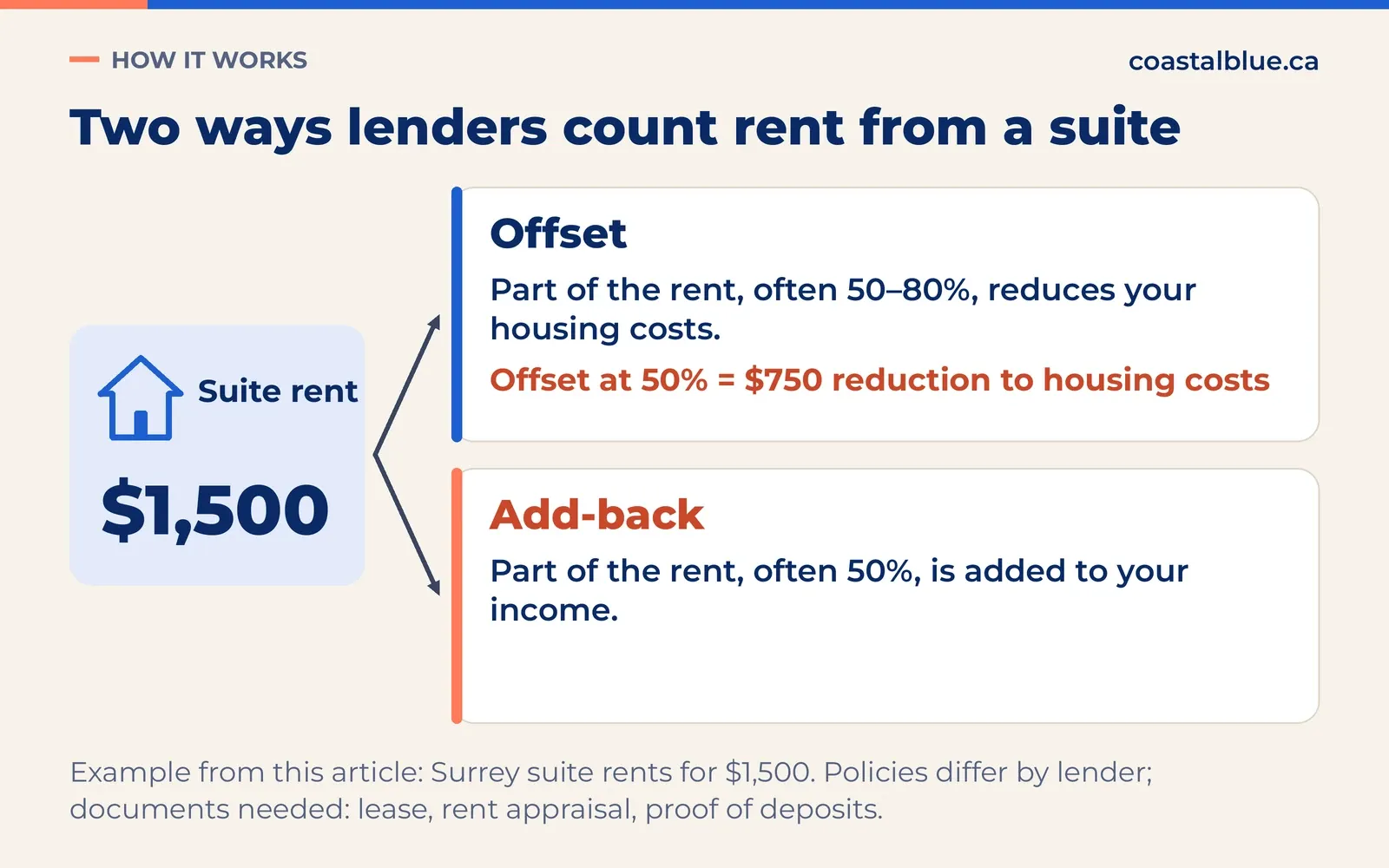
Offsets: (part of the rent, often 50–80%, reduces your housing costs)
Add-back: (part of the rent, often 50%, is added to your income)
Example: Surrey suite rents for $1,500.
Offset at 50%: = $750 reduction to housing costs.
Nick's Note
A Vancouver client’s legal suite boosted approval by $120,000 under the offset method.
Docs needed: lease, rent appraisal, proof of deposits.
Self-Employed Mortgage Guide in BC
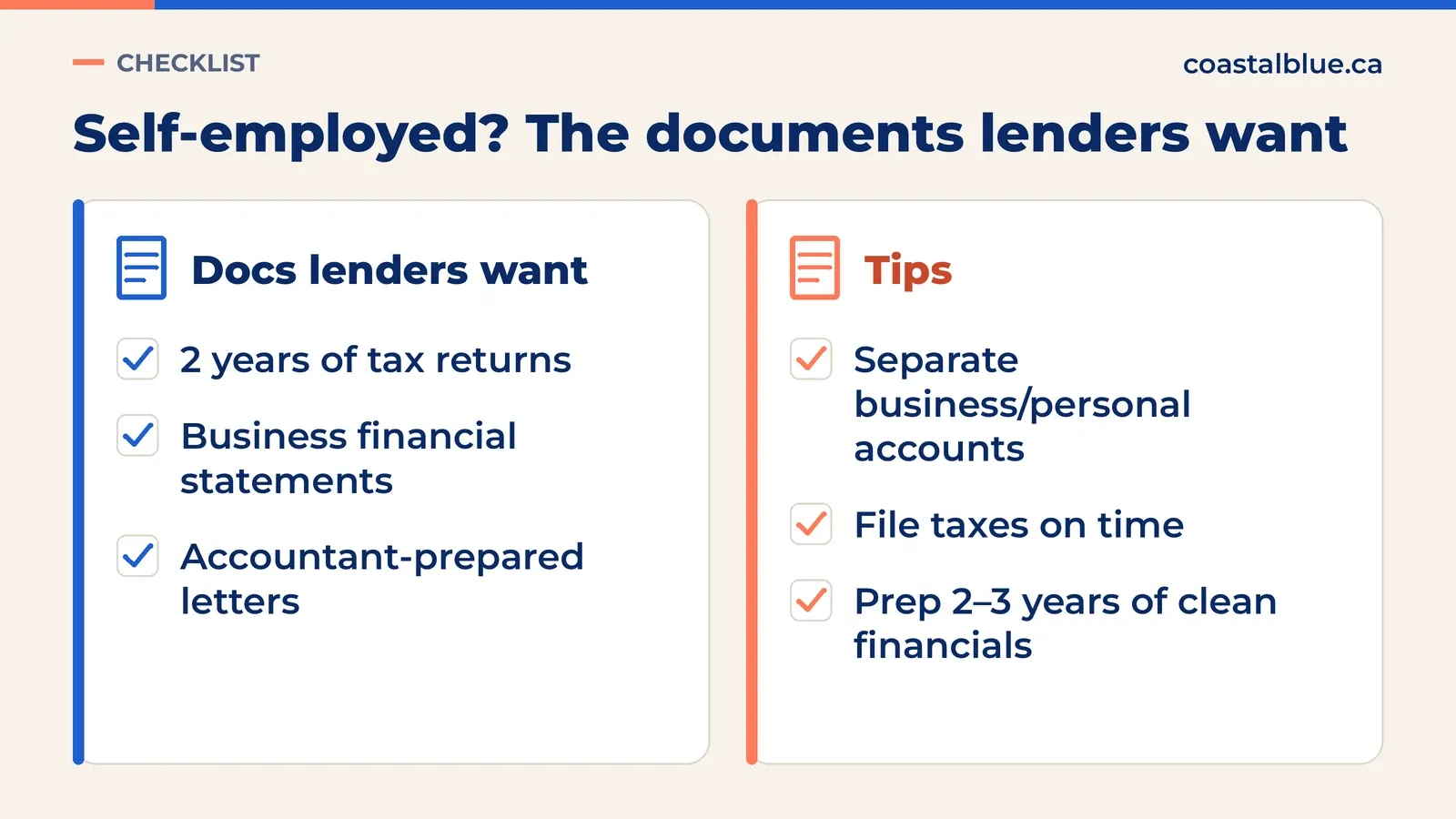
Docs lenders want:
- 2 years tax returns
- Business financials
- Accountant letter
Alternative options: stated income programs, bank statement programs (higher down payment/rates).
Nick's Note
The self-employed files that go smoothest have two clean years of tax returns and separate business and personal accounts.
Tips: separate business/personal accounts, file taxes on time, prep 2–3 years of clean financials.
Try it with your numbers
Roughly the most you could qualify for, with the stress test worked out at today's 5-year fixed rate.
The most you could qualify to buy
$603,679
A $560,154 mortgage with its insurance premium, qualified at the stress test rate of 6.64% (today's 5-year fixed at 4.64%, plus 2%, or 5.25% if higher). Includes $100 a month for heat; property tax and strata fees lower it.
Rates as of Nov 15, 2026. The low end can be a promotional or discretionary rate that not everyone qualifies for. Rates can change daily, and your rate depends on the lender approving your full application, so these are estimates, not a rate commitment.
Get my rate